

For practitioners
How Regenis delivers what conventional injectors block
Regenerative biostimulators are suspensions of solid microspheres. Conventional injector needles are specified for solutions. This page sets out the delivery problem that follows, and the engineering Regenis uses to address it.
The failure mode
Microspheres pack and bridge at the needle hub
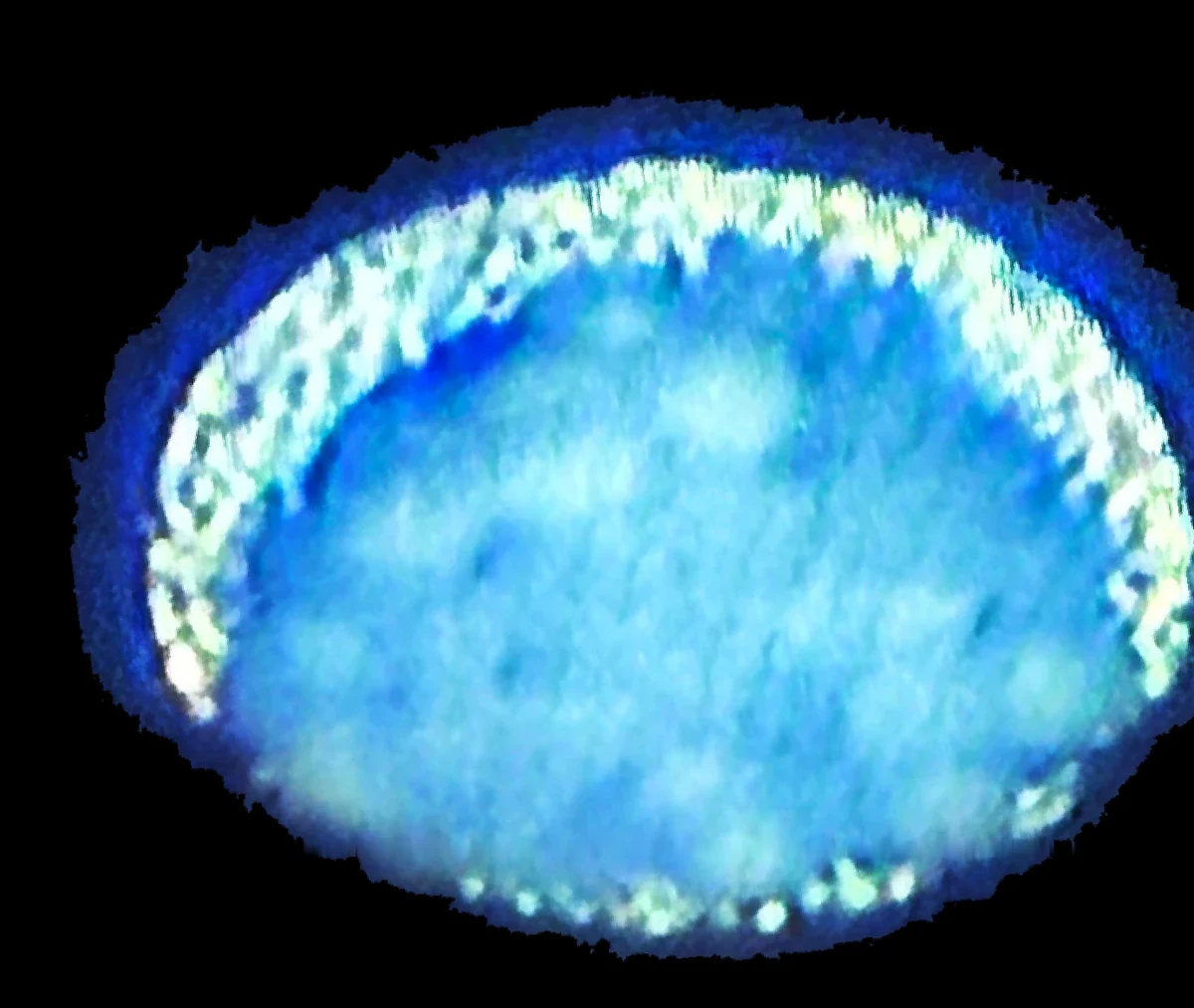
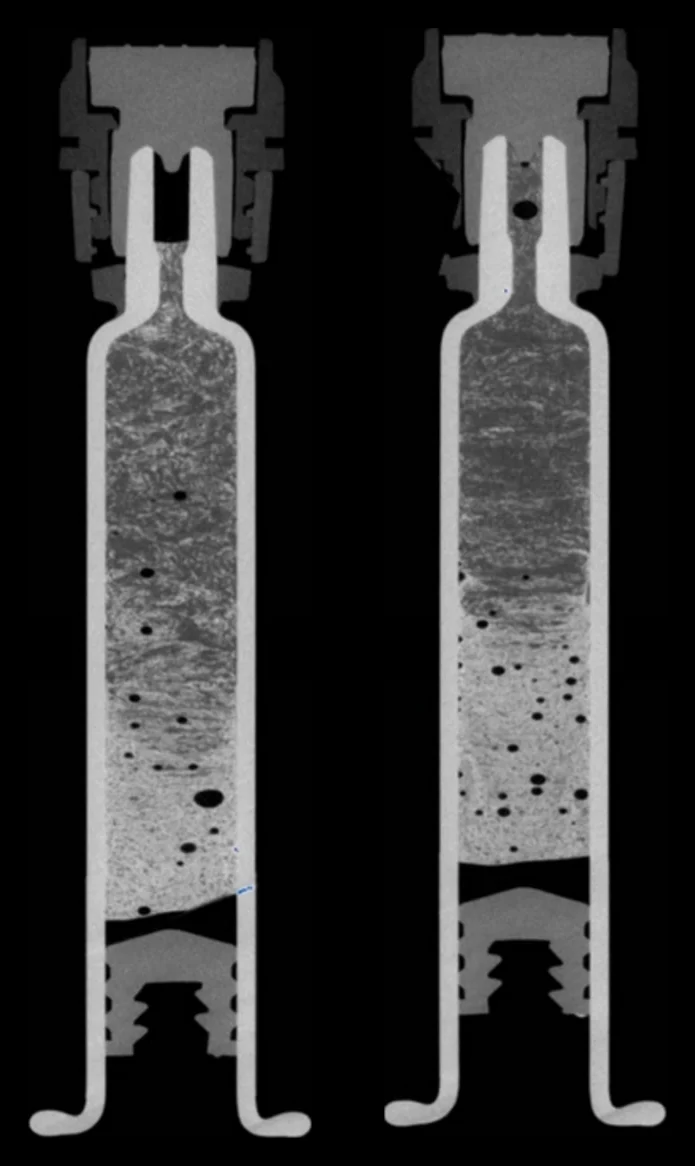
Where the hub narrows into the cannula, suspended microspheres can pack and bridge across the opening
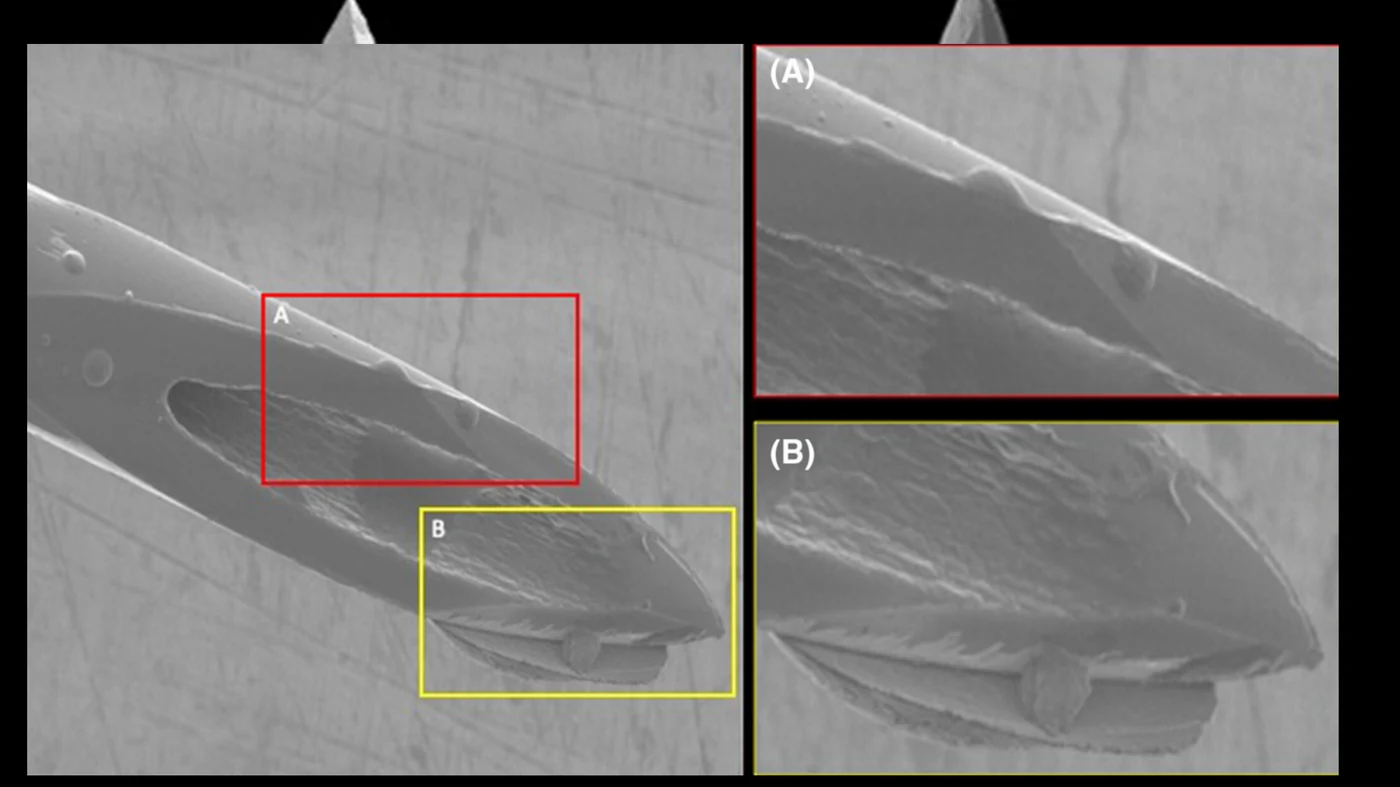
Needle tips also change shape with reuse — a separate problem from hub packing, documented on the same manufacturer plates.
Why it happens
Manual reconstitution does not distribute evenly
Biostimulator microspheres are solid and denser than their carrier, so they settle. How thoroughly a syringe is mixed by hand determines how evenly the dose is distributed — and that varies between operators and between passes.
Sensing and control
Five signals, sampled continuously, resolved in a closed loop
Sensors integrated into the handpiece report at millisecond intervals. The control model reads all five together and adjusts drive output while the injection is in progress, rather than after it.
Perception
- Negative pressure
- Thrust force
- Speed
- Current
- Torque
Control model — on-device
Quad-core ARM CPU with a dedicated AI processing unit. Injection planning, clogging warning and risk analysis run on a real-time operating system.
Actuation
- Power
- Rotation direction
- Speed
Sensors report at millisecond intervals; drive output is adjusted while the injection is in progress.
Protected design
The anti-clogging mechanism is patented
The delivery path is the subject of a granted utility-model patent held by the manufacturer
- Holder
- Hertz Biotechnology (Shenzhen) Co., Ltd.
- Title
- Microsphere injection anti-clogging device
- Application number
- 202421307575.3
- Filed
- 7 June 2024
Precision and interlocks
The system reports when delivery is not nominal
Nine needles share one regulated feed, so coverage is uniform across the treated area. When the drive train meets resistance outside its expected envelope, the system raises a named alarm rather than continuing silently.
- Alarm states
- Low suction pressure · Handle disconnected · Pusher blocked
- Needle array
- Nine-needle, uniform coverage
- Applied part
- IEC Type B
- Negative pressure
- Up to 90 kPa, 10 levels
In the treatment room
Built to be handled through a full clinic day
Weight, cleaning and consumable handling determine whether a device is used or left in a cupboard
- Handpiece weight
- 212 g
- Filtration
- Sterile negative-pressure tubing, triple filtration
- Line cleaning
- One-touch vacuum line cleaning, 750 ml/min
- Memory presets
- Eight
- Handpiece dock
- Magnetic
- Noise
- < 52 dB
Range covered
Specified for biostimulators and conventional mesotherapy solutions
The delivery path is designed around the thicker suspensions that block conventional injectors, without excluding the lighter formulations already in routine use
- Biostimulators
- PDLLA · PLLA · PCL · CaHA
- Mesotherapy solutions
- Basic · Nutritional · Functional
Specifications
Engineering specifications
- Display
- 13.3" HD touchscreen
- Handpiece weight
- 212 g
- Needle array
- Nine-needle, uniform coverage
- Negative pressure
- Up to 90 kPa, 10 levels
- Memory presets
- Eight
- Control hardware
- Quad-core ARM CPU + AI processing unit
- Operating system
- Real-time Linux
- Line cleaning
- One-touch vacuum line cleaning, 750 ml/min
- Filtration
- Sterile negative-pressure tubing, triple filtration
- Noise
- < 52 dB
- Handpiece dock
- Magnetic
- Motor durability
- 1.6 million injection cycles
- Cable
- Rated to 100,000 connection cycles
- Compliance
- GB 9706.224-2021 · YY 9706.108-2021